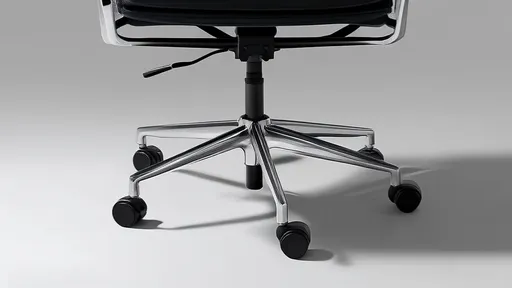
In the modern workplace, the humble office chair caster has evolved from a simple mobility tool to a critical component of ergonomic design and occupational wellness. While most employees give little thought to the wheels beneath their seats, a growing body of research reveals that these seemingly insignificant components play a pivotal role in spinal health, productivity, and workplace safety. The core stability challenge presented by office chair casters represents a fascinating intersection of physics, physiology, and furniture design that deserves closer examination.
The fundamental problem with traditional office chair casters lies in their inherent instability. Most standard casters are designed for easy movement across flat, hard surfaces, but they create a constantly shifting base of support. This continuous micro-movement forces the body's core muscles to remain engaged throughout the workday, leading to what ergonomic specialists call "low-grade continuous muscle fatigue." Unlike the beneficial core engagement experienced during deliberate exercise, this constant stabilization effort occurs at a subconscious level, draining energy and contributing to the end-of-day exhaustion many office workers experience.
Research conducted at several occupational health institutes has demonstrated that the instability caused by standard casters increases metabolic cost by approximately 12-15% compared to stable seating. This additional energy expenditure might seem insignificant in the short term, but over months and years of continuous exposure, it represents a substantial drain on physical resources. The body compensates for this instability through subtle postural adjustments that often lead to slouching, leaning, or other compensatory positions that exacerbate spinal stress.
The relationship between caster design and spinal health is particularly crucial when considering the lumbar region. The lumbar spine depends on proper support and alignment to maintain its natural curvature. When casters create constant instability, the erector spinae muscles must remain partially contracted to maintain upright posture. This sustained tension can lead to decreased blood flow to the spinal structures, accelerated disc degeneration, and chronic lower back pain that affects millions of office workers worldwide.
Manufacturers have responded to these challenges with various innovative solutions. Dual-wheel casters, for instance, provide a wider base of support while maintaining mobility. These designs feature two smaller wheels mounted side-by-side, effectively creating a more stable platform that still allows for easy movement. Laboratory testing has shown that dual-wheel designs reduce postural sway by up to 40% compared to traditional single-wheel casters, significantly decreasing the metabolic cost of sitting.
Another promising development comes from caster systems with integrated braking mechanisms. These advanced systems allow users to lock their chairs in position when engaged in focused work, eliminating unwanted movement during tasks requiring precision or concentration. The ability to transition seamlessly between mobile and fixed states addresses both the need for movement throughout the workday and the requirement for stability during intensive work periods.
Material science has also contributed significantly to solving the core stability challenge. Advanced polymer compounds now allow for the creation of casters with variable hardness levels that can be matched to specific flooring types. Softer wheels provide better grip and stability on hard surfaces, while harder compounds work better on carpeting. This specialization ensures that chairs remain stable in their intended environments, reducing the micro-movements that contribute to core fatigue.
The psychological impact of chair stability should not be underestimated. Studies in environmental psychology have demonstrated that physical stability contributes to mental focus and cognitive performance. Workers using chairs with improved stability systems report higher levels of concentration and reduced mental fatigue. This connection between physical support and mental performance highlights the importance of addressing caster design as part of comprehensive workplace wellness initiatives.
Despite these technological advances, implementation challenges remain. Many organizations continue to prioritize cost over ergonomic benefits when purchasing office furniture. The premium for chairs with advanced caster systems typically ranges from 15-30% over conventional options, creating resistance among procurement departments that may not fully appreciate the long-term health and productivity benefits. This short-term thinking often leads to greater expenses down the line in the form of increased healthcare costs and reduced productivity.
Training and education represent another significant hurdle. Even the most advanced caster systems provide limited benefits if users don't understand how to properly utilize them. Many employees remain unaware that their chair's casters might be contributing to their discomfort or fatigue. Comprehensive workplace ergonomic programs must include education about proper chair adjustment and the importance of stability for long-term health.
The future of caster technology appears promising, with several companies developing smart casters equipped with pressure sensors and microprocessors. These intelligent systems can automatically adjust resistance based on user weight, movement patterns, and even specific tasks. Some prototypes can detect when a user is engaged in focused work and automatically increase stability, then return to standard mobility when the user prepares to move. This adaptive approach represents the next frontier in office chair design.
Biomechanical research continues to reveal new insights into how subtle movements affect the human body over extended periods. Recent studies using motion capture technology have shown that even millimeter-scale movements, when repeated thousands of times daily, create cumulative stress on spinal structures. This research is driving innovation toward caster systems that eliminate not just large movements but these micro-movements as well.
The economic argument for investing in better caster technology grows stronger as research quantifies the impact on workplace productivity. Companies that have implemented chairs with advanced stability systems report reductions in musculoskeletal complaints ranging from 25-40%. These improvements translate directly to reduced absenteeism, lower healthcare costs, and improved work output. The return on investment typically materializes within 12-18 months, making the business case increasingly compelling.
As remote work becomes more prevalent, the challenge of core stability extends beyond traditional office environments. Home offices often feature inadequate seating solutions that compound stability issues. The furniture industry is responding with consumer-grade options that incorporate professional-level caster technology, bringing ergonomic benefits to distributed workforces. This democratization of advanced ergonomic features represents a positive step toward addressing workplace wellness regardless of physical location.
The conversation around office chair casters ultimately reflects broader themes in workplace design and occupational health. What begins as a discussion about wheels evolves into considerations about human performance, organizational efficiency, and quality of life. The core stability challenge serves as a reminder that sometimes the smallest components can have the most significant impact on our daily experience and long-term wellbeing.
Looking ahead, the integration of caster technology with other ergonomic systems will likely create holistic solutions that address multiple aspects of workplace health simultaneously. Chairs that communicate with standing desks, adjust based on biometric feedback, and adapt to individual user needs represent the future of office furniture. In this evolving landscape, the humble caster will continue to play a crucial role in creating work environments that support both physical health and professional performance.

By /Aug 14, 2025

By /Aug 25, 2025
By /Aug 25, 2025

By /Aug 25, 2025
By /Aug 25, 2025
By /Aug 25, 2025
By /Aug 25, 2025

By /Aug 25, 2025

By /Aug 25, 2025

By /Aug 25, 2025
By /Aug 25, 2025
By /Aug 25, 2025

By /Aug 25, 2025
By /Aug 25, 2025

By /Aug 25, 2025
By /Aug 25, 2025
By /Aug 25, 2025

By /Aug 14, 2025
By /Aug 25, 2025
By /Aug 25, 2025
