In an age where digital distractions dominate our leisure time, a surprising trend is reemerging from the annals of childhood play: the pillow fight. But this isn't the chaotic, feather-flying free-for-all of sleepovers past. This is Pillow Combat, a structured, high-energy activity rapidly gaining traction in fitness circles and corporate team-building retreats as a serious tool for honing reaction speed and agility.
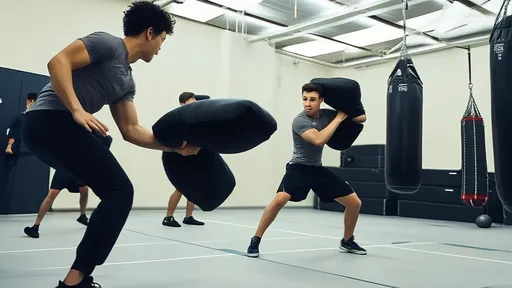
The modern iteration transforms the humble pillow from a soft furnishing into a training instrument. Participants, often equipped with lightweight, durable combat pillows specifically designed for the activity, engage in one-on-one or group bouts. The objective isn't merely to hit an opponent but to land a clean strike while simultaneously dodging, weaving, and parrying incoming swings. This constant cycle of offensive action and defensive reaction creates a dynamic environment that forces the brain and body to communicate at an accelerated pace.
The core of this training lies in its demand for instantaneous decision-making. Unlike predictable gym machines, a swinging pillow carried by a thinking opponent is an unpredictable stimulus. The brain must process its trajectory, speed, and angle in milliseconds, then send signals to the muscles to execute an appropriate evasion—a duck, a sidestep, or a block with your own pillow. This rapid neural firing is a rigorous workout for the nervous system, improving the efficiency of the pathways between the eyes, brain, and body. Over time, this practice can shave precious milliseconds off one's reaction time, a benefit that translates far beyond the game itself.
Furthermore, the physical movements required are a full-body lesson in agility. Successful participants aren't standing still; they are in constant motion. They practice quick, light footwork to maintain balance and reposition themselves rapidly. They employ core strength to twist and turn the torso away from attacks, and they use their arms for both precise strikes and defensive maneuvers. This combination develops functional agility—the kind useful for avoiding a stumbling pedestrian on a crowded street, catching a falling object, or excelling in sports that require quick directional changes.
Beyond the raw physical and neurological benefits, Pillow Combat serves as an exceptional stress reliever. The act of swinging a pillow, even with focused intent, is inherently playful. It triggers laughter and releases endorphins, lowering cortisol levels. This psychological aspect is crucial; a relaxed yet alert mind often reacts faster than a tense, anxious one. The playful context removes the performance pressure found in traditional gyms, allowing individuals to push their limits in a joyful, almost primal way, thereby enhancing overall mental acuity and focus.
Proponents of the activity also highlight its accessibility. It requires minimal equipment, poses a lower risk of injury compared to contact sports using harder equipment, and can be adapted for all ages and fitness levels. From children developing motor skills to seniors working on coordination and fall prevention, the intensity can be easily scaled. This inclusivity has led to its adoption in diverse settings, from physical therapy clinics to Silicon Valley tech companies looking for innovative ways to break up long hours of sedentary work and re-energize their teams.
In essence, the upgraded pillow fight is a perfect example of exergaming in its most analog form. It cleverly disguises intense cognitive and physical training within a framework of pure fun. It proves that valuable fitness outcomes—sharpened reflexes, enhanced agility, and improved mental processing—don't have to be forged solely in the grim silence of a weight room. Sometimes, they can be developed through laughter and the satisfying thwack of a well-placed pillow strike, making the journey to a quicker, sharper self an genuinely enjoyable one.

By /Aug 14, 2025

By /Aug 25, 2025

By /Aug 25, 2025

By /Aug 25, 2025

By /Aug 25, 2025
By /Aug 25, 2025

By /Aug 25, 2025

By /Aug 25, 2025

By /Aug 25, 2025

By /Aug 25, 2025

By /Aug 25, 2025

By /Aug 25, 2025

By /Aug 25, 2025
By /Aug 25, 2025

By /Aug 25, 2025

By /Aug 25, 2025
By /Aug 25, 2025

By /Aug 14, 2025

By /Aug 25, 2025

By /Aug 25, 2025
