In the world of strength training, we often overlook the most fundamental tools right under our noses—or more accurately, right in our kitchens. The humble cookware that fills our cabinets represents more than just culinary potential; it embodies a unique opportunity for functional fitness. For those looking to incorporate resistance training into their daily routines without investing in expensive equipment, everyday household items provide an accessible and surprisingly effective alternative. Among these, pots, pans, and other weighted kitchen implements offer a versatile and immediately available means to engage in strength-building exercises, particularly various forms of curls that target the biceps, forearms, and overall upper body.
Before diving into the practical applications, it’s essential to understand the basic biomechanics of curl exercises. Whether performed with dumbbells, resistance bands, or improvised weights, curls primarily engage the elbow flexors—the muscle group responsible for bending the arm. This includes the biceps brachii, brachialis, and brachioradialis, each contributing to arm flexion and stabilization. The effectiveness of the exercise depends not only on the weight used but also on factors like grip, range of motion, and tempo. When utilizing household items like pots or pans, the irregular shape and distribution of weight can introduce an additional challenge, engaging stabilizer muscles more intensely than traditional weights might.
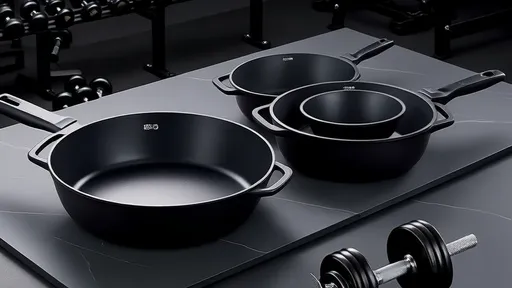
Estimating the weight of common cookware is the first step toward integrating these items into a workout. Most people are surprised by how heavy their everyday pots and pans actually are. A standard cast-iron skillet, for example, can weigh anywhere from 5 to 10 pounds, while larger Dutch ovens may tip the scales at 15 pounds or more. Non-stick frying pans tend to be lighter, often ranging between 2 and 4 pounds, making them suitable for beginners or higher-repetition sets. Stockpots, especially when filled with water, can become significantly heavier, but for safety and practicality, it’s advisable to use them empty or only partially filled. By simply hefting these items and comparing them to familiar gym weights, one can develop a fairly accurate sense of their resistance potential.
Why bother with pots and pans when dumbbells are readily available at most stores? The answer lies in the principles of functional fitness and adaptability. Functional training emphasizes movements that mimic or support everyday activities, improving strength that translates directly to real-world tasks. Lifting a heavy pot off the stove, carrying groceries, or moving furniture all require similar muscle engagement to curl variations. By training with irregular objects, you not only build raw strength but also enhance grip stability, coordination, and proprioception—the body’s ability to sense its position in space. This approach fosters a more well-rounded resilience than isolated machine-based exercises alone.
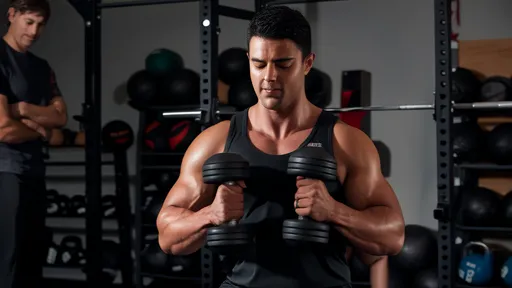
Getting started with cookware curls requires attention to safety and form. Always ensure that the pot or pan has a secure handle, free from cracks or looseness that could lead to accidents. Begin with lighter items to gauge your strength and comfort level, gradually progressing to heavier objects as you become more confident. Stand with your feet shoulder-width apart, keeping your core engaged and your back straight to avoid strain. Curl the item slowly and with control, focusing on the muscle contraction rather than momentum. Exhale as you lift, inhale as you lower, and avoid locking your elbows at the bottom of the movement to maintain tension on the muscles.
Variety is key to any effective workout routine, and cookware curls are no exception. Beyond the standard standing curl, you can experiment with hammer curls by holding the pot vertically, which places greater emphasis on the brachialis and forearms. Seated curls can help isolate the biceps by minimizing lower body involvement, while alternating curls allow for higher volume without premature fatigue. For those seeking a greater challenge, isometric holds—pausing at the top of the curl for a few seconds—can intensify the burn and improve muscular endurance. Remember, the goal is not to replicate a gym session perfectly but to create a stimulating and effective workout with what you have on hand.
One of the most significant advantages of using household items for exercise is the sheer convenience. There’s no need to commute to a gym, purchase equipment, or even change into workout clothes if you’re already in the midst of cooking or chores. This accessibility makes it easier to maintain consistency, especially on busy days when a full workout seems impractical. A set of curls while waiting for water to boil or during a break in food preparation can accumulate meaningful volume over time, contributing to long-term strength gains without requiring dedicated time slots.
It’s important to acknowledge the limitations and potential risks of this approach. Cookware is not designed for fitness, and its weight distribution may be uneven, increasing the risk of strain if used improperly. Those with pre-existing shoulder, elbow, or wrist issues should exercise caution and possibly consult a healthcare professional before beginning. Additionally, while pots and pans can serve as excellent substitutes for traditional weights, they are not a complete replacement for a balanced strength program that includes pushing, pulling, and lower body exercises. Always prioritize safety and listen to your body’s signals to avoid injury.
Beyond the physical benefits, incorporating cookware into your fitness routine can shift your perspective on exercise itself. It reinforces the idea that strength training is not confined to specialized environments but can be woven into the fabric of daily life. This mindset promotes creativity, resourcefulness, and a deeper connection to the functional purpose of muscle building. Whether you’re a seasoned athlete looking to spice up your routine or a beginner taking the first steps toward fitness, the weights you need might already be within arm’s reach.
In conclusion, the kitchen holds untapped potential for those willing to see it through a fitness lens. By quickly estimating the weight of common pots and pans and applying them to curl variations, you can create an effective, convenient, and engaging workout that requires no financial investment or extra space. Embrace the simplicity and functionality of this approach, and you may find that the path to stronger arms—and a more versatile fitness mindset—begins right at the stove.
By /Aug 14, 2025
By /Aug 25, 2025
By /Aug 25, 2025

By /Aug 25, 2025
By /Aug 25, 2025
By /Aug 25, 2025
By /Aug 25, 2025

By /Aug 25, 2025
By /Aug 25, 2025
By /Aug 25, 2025
By /Aug 25, 2025
By /Aug 25, 2025
By /Aug 25, 2025
By /Aug 25, 2025
By /Aug 25, 2025
By /Aug 25, 2025
By /Aug 25, 2025

By /Aug 14, 2025
By /Aug 25, 2025

By /Aug 25, 2025
